.svg)
.svg)
.svg)

Dental Crowns vs Veneers: Which Is Best for You?
Crowns vs veneers, which is right for your smile? Salt Creek Dental in Graham, TX compares cost, durability, and best uses to help you decide.

You've decided it's time to do something about that tooth that's been bothering you. Maybe it's chipped from an unfortunate encounter with an ice cube. Maybe it's discolored in a way that whitening hasn't fixed. Maybe it's just never looked quite right, and you're finally ready to address it.
So you start researching, and you keep seeing two options come up: crowns and veneers. They both seem to fix teeth. They both involve covering the tooth with something that looks better. But the more you read, the more confused you get about which one you actually need.
Here's the thing—crowns and veneers are both excellent solutions, but they're designed for different problems. Choosing the wrong one doesn't just waste money; it can actually make your dental situation worse. The key is understanding what each option does, when it's appropriate, and how it fits your specific situation.
At Salt Creek Dental in Graham, Texas, we walk patients through this decision regularly. Our Cosmetic Dentistry services include both options, and we're committed to helping you understand which choice will give you the best long-term results. This guide breaks down everything you need to know to make an informed decision about your smile.
Understanding Dental Veneers: The Cosmetic Solution
Dental Veneers are thin shells of porcelain or composite material that cover the front surface of teeth. Think of them like contact lenses for your teeth—they change the appearance without dramatically altering the underlying structure.
Veneers are primarily cosmetic. They're designed to improve how teeth look, not to restore structural integrity or fix serious damage. When you get veneers, a small amount of enamel is removed from the front of your tooth (usually about half a millimeter), and the veneer is bonded to that prepared surface.
The result can be transformative. Veneers can change the color, shape, size, and alignment of teeth, creating a completely new smile from teeth that were stained, chipped, slightly crooked, or just not the shape you wanted.
Veneers work best when the underlying tooth is healthy and structurally sound. They're not strong enough to repair a tooth that's significantly damaged or weakened. They're also not reversible—once enamel is removed to place a veneer, that tooth will always need some form of covering.
The typical veneer lasts 10-15 years with good care, though some patients get much longer wear from them. They're resistant to staining (more so than natural teeth, actually) and look remarkably natural when properly made and placed.
Understanding Dental Crowns: The Restorative Workhorse
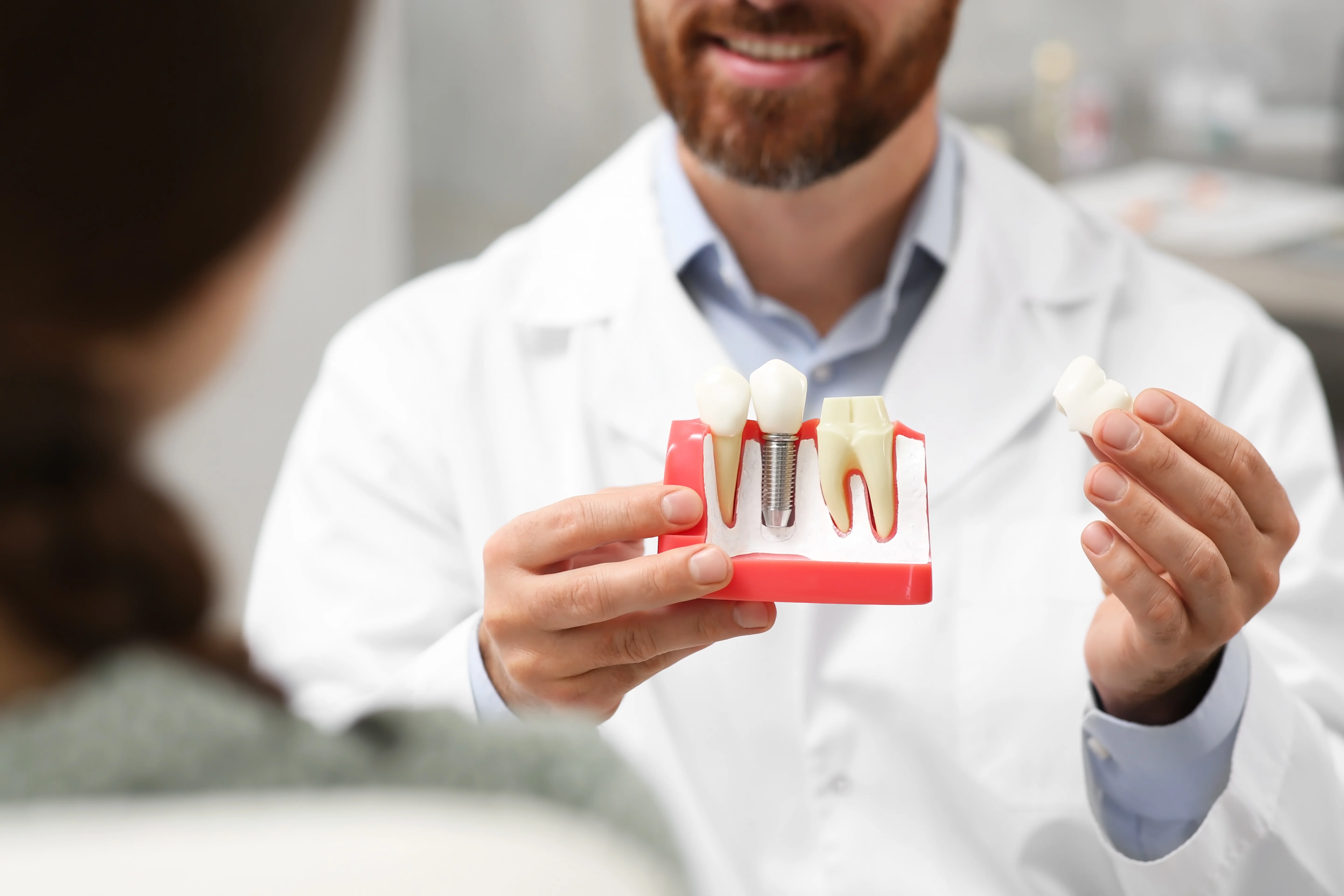
Dental Crowns are full-coverage restorations that completely encase a tooth from the gum line up. Unlike veneers, which only cover the front, crowns wrap around the entire tooth, providing both cosmetic improvement and structural reinforcement.
Crowns are used when teeth are too damaged for more conservative treatments. A tooth that's had a large filling, a root canal, significant decay, or a crack needs the protection a crown provides. Without it, the compromised tooth is at high risk of further damage or complete failure.
Getting a crown involves more tooth preparation than a veneer. The tooth is reduced on all sides to make room for the crown material, which typically ranges from 1-2 millimeters depending on the type of crown being placed.
Modern crowns are made from various materials including all-ceramic, porcelain-fused-to-metal, and zirconia. Each has advantages depending on the location of the tooth and specific patient needs. Front teeth often get all-ceramic crowns for the best aesthetics, while back teeth might get stronger materials that can handle heavy chewing forces.
Crowns generally last 15-20 years or longer with good care. They're stronger than veneers and can withstand significant biting forces, making them appropriate for teeth that do heavy-duty chewing work.
When Veneers Are the Right Choice
Veneers shine in situations where cosmetics are the primary concern and the underlying tooth is healthy.
Staining that doesn't respond to whitening is a classic indication for veneers. Teeth discolored by tetracycline antibiotics, excessive fluoride during development, or trauma often can't be improved with Teeth Whitening alone. Veneers cover the discoloration with a new surface that can be any shade you choose.
Minor chips and wear make excellent candidates for veneers. If your teeth have gotten shorter over time from grinding, or if you've chipped the edges in ways that make them look uneven, veneers can restore a youthful, even appearance.
Slight misalignment can sometimes be corrected with veneers instead of orthodontics. If your teeth are generally healthy but just slightly crooked or have gaps, veneers can create the appearance of perfectly aligned teeth without braces. This isn't appropriate for significant misalignment, but for minor issues, it's an efficient solution.
Teeth that are naturally small, oddly shaped, or just don't match each other can be transformed with veneers. If you've always wished your teeth were longer, wider, or more uniform, veneers can create the smile you've imagined.
The common thread in all these situations: the tooth itself is fundamentally sound. It doesn't need strengthening—it just needs a new surface.
When Crowns Are the Necessary Choice
Crowns become necessary when teeth need structural help, not just cosmetic improvement.
Teeth with large fillings often eventually need crowns. When more than half of a tooth's structure has been replaced with filling material, the remaining natural tooth is at risk of cracking. A crown holds everything together and prevents catastrophic failure.
Root canal treatment typically requires a crown afterward. The procedure removes the living tissue inside the tooth, leaving it more brittle than a vital tooth. Without a crown's protection, root-canal-treated teeth are prone to fracture.
Cracked teeth need crowns to prevent the crack from propagating. A crack that reaches the root means losing the tooth entirely, so catching it early and crowning the tooth can save it.
Severely worn teeth may need crowns to restore proper bite function and protect what's left. Advanced tooth wear from grinding, acid erosion, or other causes sometimes goes beyond what veneers can address.
Teeth that will anchor dental bridges need crowns. The anchor teeth support the false tooth that replaces a missing one, and they need the strength crowns provide.
In all these cases, the tooth needs more than a cosmetic cover—it needs the structural support only a crown can provide.
The Gray Area: When Either Could Work
Sometimes the decision isn't clear-cut. A tooth might be in that in-between zone where both options could potentially work.
Consider a tooth that's had a moderate filling and also has some cosmetic issues. It might not strictly need a crown yet, but a veneer might not be the most durable long-term solution either.
In these situations, we look at several factors. How much healthy tooth structure remains? What are the patient's bite forces like—do they grind their teeth or clench? What's the patient's risk tolerance? What matters more to them—maximizing tooth conservation or maximizing durability?
A younger patient with a moderately damaged tooth might opt for a veneer now, knowing they'll probably need a crown eventually, because preserving tooth structure while they're young gives them more options later. An older patient with the same situation might prefer the crown's durability and be done with it.
There's rarely one "right" answer in these gray-zone cases. It's about understanding trade-offs and making the choice that best fits your specific circumstances and priorities.
Comparing the Procedures
Both veneers and crowns require two appointments in most cases, though the experiences differ somewhat.
For veneers, the first appointment involves preparing the teeth by removing a thin layer of enamel from the front surface. Impressions are taken, and temporary veneers are placed. The permanent veneers are custom-made in a dental lab over 1-2 weeks, then bonded to your teeth at the second appointment.
Crown preparation is more extensive. The tooth is reduced on all sides, shaped into a smaller version of itself that the crown will fit over. Impressions are taken, a temporary crown is placed, and the permanent crown returns from the lab in 1-2 weeks for final placement.
Recovery from both procedures is minimal. You might have some sensitivity for a few days, particularly to hot and cold, but most patients return to normal immediately. Temporary restorations require a bit of care—avoiding sticky foods and being gentle when brushing—but they're just a short-term inconvenience.
The Role of Other Cosmetic Options
Veneers and crowns aren't the only ways to improve your smile. Sometimes the best answer is something else entirely.
Dental Bonding uses tooth-colored composite resin applied directly to teeth in a single appointment. It's less expensive than veneers and requires no lab work, making it great for minor repairs and cosmetic tweaks. The trade-off is durability—bonding typically lasts 5-7 years compared to veneers' 10-15.
Tooth Colored Fillings can address decay and minor damage while maintaining natural appearance. Modern composite fillings blend seamlessly with natural teeth and can often be the conservative first step before more extensive restorations.
Professional whitening can sometimes achieve the results patients thought they needed veneers for. If discoloration is the main concern and the color responds to bleaching, whitening is far less invasive and less expensive.
For patients wanting comprehensive change, Smile Makeovers combine multiple treatments tailored to individual needs. Someone might get whitening on most teeth, veneers on a few, and crowns on others—whatever combination creates the ideal result.
The point is that veneers and crowns are tools in a toolbox. The best dentists use the right tool for each specific situation rather than defaulting to one option for everything.
Cost Considerations
Let's talk money, because it matters.
Veneers typically cost less per tooth than crowns, primarily because they require less material and simpler preparation. However, veneers are almost always placed on multiple teeth for aesthetic harmony, which can add up quickly.
Crowns are often covered by dental insurance when they're medically necessary—meaning the tooth needs the crown for health reasons, not just cosmetics. Veneers are rarely covered because they're considered elective cosmetic treatment.
The math can work out differently than you'd expect. A single crown covered by insurance might cost you less out-of-pocket than a single veneer you're paying for entirely yourself.
We're always transparent about costs and insurance coverage before beginning any treatment. Nobody should be surprised by a bill after the fact.
Longevity and Maintenance
Both veneers and crowns can last many years, but they're not maintenance-free.
Daily care is the same for both: brush twice daily, floss once daily, and see your dentist regularly. Neither veneers nor crowns can get cavities themselves, but the natural tooth underneath them absolutely can. Decay at the margin where restoration meets tooth is the most common reason these restorations fail.
Avoiding bad habits extends the life of any dental work. Don't chew ice, don't use your teeth as tools, and if you grind your teeth at night, wear a night guard. Both veneers and crowns can be damaged by excessive force, though crowns are generally more robust.
When restorations do eventually fail—and they all do eventually—they need to be replaced. Veneers can sometimes be replaced with new veneers, or the tooth might need a crown by that point. Crowns are typically replaced with new crowns.
Making Your Decision
So how do you actually decide?
Start with function. If your tooth needs structural help—it's cracked, heavily filled, or had a root canal—the decision is made for you. You need a crown. Don't try to put a veneer on a tooth that needs a crown; it will fail.
If the tooth is structurally sound, consider your goals. What specifically do you want to change? Color? Shape? Size? Veneers address all these cosmetic concerns beautifully.
Think about scope. Are we talking about one tooth or many? A single damaged back tooth probably needs a crown. A full smile makeover of healthy front teeth probably involves veneers.
Finally, have a conversation with your dentist. A thorough examination, possibly including x-rays or digital imaging, reveals things you can't see or feel yourself. Your dentist can tell you what's realistic, what's risky, and what makes the most sense for your specific situation.
Conclusion
Crowns and veneers both transform smiles, but they're not interchangeable. Crowns restore and protect damaged teeth. Veneers enhance the appearance of healthy teeth. Using the right one for the right situation is essential for results that look great and last.
At Salt Creek Dental in Graham, Texas, we take the time to understand what you're hoping to achieve and examine your teeth thoroughly before recommending treatment. Whether you need the structural support of a crown, the cosmetic enhancement of veneers, or something else entirely, we'll help you understand your options and make a decision you're confident about.
Your smile is worth getting right. Contact Salt Creek Dental today to schedule a consultation and take the first step toward the smile you've been imagining.
Ready for a Beautiful Smile?
Fill out the form and get a callback in 48 hours or less.


Book Your Appointment Now
.svg)

Frequently Asked Questions
Common Dental Questions Answered for Graham, Texas Families
.svg)
.svg)
.svg)

How often should I visit the dentist?
Routine dental visits every six months help maintain good oral health and prevent future issues.
Do you offer discounts for cash clients or seniors?
Yes, we offer special discounts for cash-paying clients and senior patients to make dental care more affordable. Contact our office to learn more about the discounts available for your treatment plan.
Will you bill my insurance if you're not a PPO provider?
Absolutely! While we are not a PPO provider, we will gladly bill all insurance plans on your behalf to help you maximize your benefits. Please reach out to us with your insurance details for assistance.
What should I do if I have a dental emergency?
For any dental emergency, it’s important to contact us as soon as possible so we can provide timely care and relieve discomfort.